- Recorded
- 14 March 2026
- Quarter
- Inner west
- Air
- 71 F at the start
- Sky
- Hazy sun, light southeast breeze
- On foot
- 0.8 miles, about 50 minutes
Record 02
The corner where the paper ran out
With no zoning, the thing holding a residential corner residential is usually a private agreement with an expiry date. This is a block where the date passed.
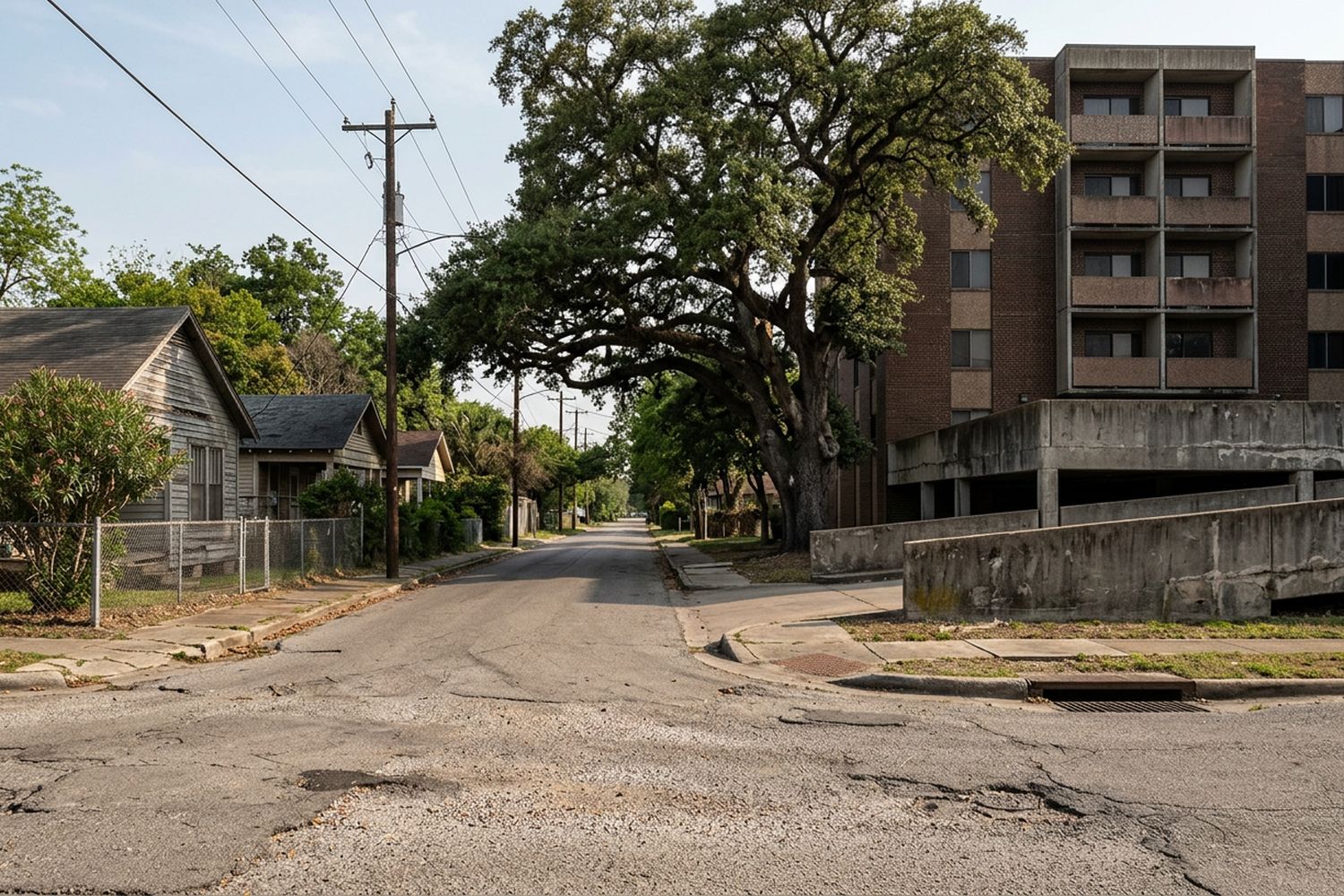
Eleven parcels. One of them is now six storeys and takes up as much frontage as four of the others together.
The tower is the newest thing here by forty years and the tallest by five storeys. It is a residential building with a parking podium, brick to the second floor and panel above, and it sits on the corner where a filling station stood until the middle of the last decade.
Across a twenty foot side street from its podium wall are six houses of the ordinary inner city sort: one and a half storeys, brick and siding, built when this was the edge of town.
What stands here
The tower and podium take the whole corner parcel and half the frontage on the long side. Behind it, along the same side, are two small apartment buildings from the sixties, both two storey, both with their parking in front. Then a bungalow that has been a dentist's office for long enough to have a sign older than the tower.
The other long side is the six houses, unbroken. The short side at the far end is a church hall, a vacant parcel and a duplex.
Why it could happen
Deed restrictions are private contracts running with the land. They expire, they can be voted out, and they can simply stop being enforced when nobody left on the block will pay a lawyer.
There was no map to change and no hearing to lose. The corner was assembled out of a commercial parcel and part of a residential one, the restriction that had governed the residential side had lapsed years earlier, and the rest was a matter of financing.
That is the whole mechanism, and it explains most of the surprising skylines in this city. The tall thing is not there because a plan called for it. It is there because nothing said no and somebody had the money.
What the arrangement produces
- Shade, which is not the complaint you would expect. In this climate the six houses gained an afternoon of shade and, by two accounts offered unprompted, are glad of it.
- Traffic on a street built for a dozen cars. The podium exit is on the side street. At half past five there was a queue of four, which on a twenty foot street is a jam.
- Wind. Between the podium and the houses there is a corridor that was moving air on a day when nothing else was.
- Water. The corner used to be a filling station with an acre of asphalt; it is now a building with a bigger roof and a detention arrangement underneath. The ditch at the low end of the block was dry on a day after rain, which it did not use to be.
- A parking pattern that reverses. The houses park on the street at night. The tower's visitors park on the street in the day. The same kerb serves two populations that never meet.
Walking it
Pavement on all four sides, which is unusual on this run and is entirely because the tower had to build it. Kerb cuts at both podium entrances. Two marked crossings, both at the far end, neither with a signal.
Eight tenths of a mile with the return, fifty minutes with stops, on the first properly warm day of the year.
What it tells you
That the transition a zoning map spends a hundred pages managing gets managed here anyway, by a podium wall and a twenty foot street. Badly in the places you would predict, and better than expected in the ones you would not.
Nobody on this block chose to live next to a six storey building. Nobody in a zoned city chooses their neighbours either. The difference is only in how much notice they get.